In short
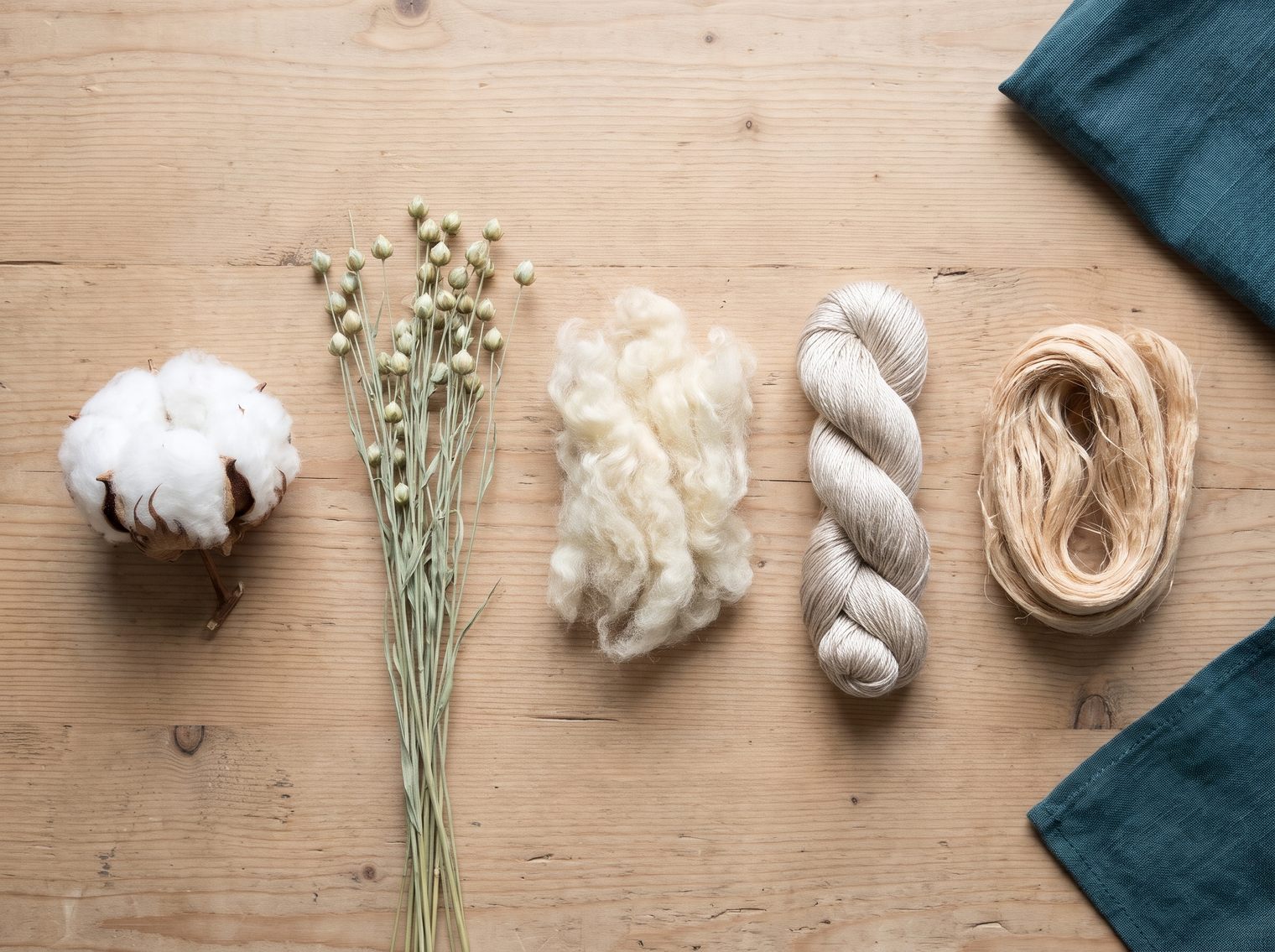
Each fiber carries its chemical load at a different stage. Conventional cotton's is on the farm, where it took 10% of the world's insecticides on 2.4% of its cultivated land in 2019 (PAN UK). Wool's is in sheep treatments, scouring and chlorine shrink-proofing. Linen's turns on how the flax is retted. Rayon from bamboo needs chemicals the FTC calls toxic (FTC), lyocell recovers over 99% of its solvent (Lenzing), and polyester is usually made with an antimony catalyst. A finish can sit on top of any of them.
This guide is for: people who want to know where chemicals enter each bedding fiber, so a label or certificate makes more sense when they read it.
Key Takeaways
- Conventional cotton took 10% of the world's insecticides on a small share of cultivated land, by the International Cotton Advisory Committee's figures (PAN UK).
- Our count: 6 of 10 wool comforter pages we read name how the wool was washed, and only 1 says its wool went through a chlorine wash.
- Lyocell recovers more than 99% of its solvent (Lenzing), while rayon from bamboo needs chemicals the FTC calls toxic (FTC).
Where does each fiber pick up chemicals on its way to your bed?
Cotton's chemicals sit mostly on the farm, wool's in cleaning, rayon's in the factory, and any fiber you buy can gain a finish at the end.
The question that helps is where in each fiber's life the chemicals went in. A plant fiber can be sprayed heavily in the field and then handled gently at the mill. An animal fiber can come from a clean pasture and still be chlorinated before it is spun. Polyester never sees a farm.
The table below is our judgement, drawn from the sources linked in each section further down. It names the stage with the most chemical input and the listing detail that tells you something about that stage.
| Fiber | Stage with the most chemical input | What a listing can tell you |
|---|---|---|
| Conventional cotton | Growing, mostly insecticides | Whether "organic" comes with a processing standard |
| Linen | Retting, if done with chemicals; bleaching and dyeing | The retting method, and whether it is undyed |
| Wool | Sheep treatments, scouring, shrink-proofing | Whether washable wool was chlorinated |
| Silk | Degumming in soap and soda; dyeing | Whether the silk is dyed |
| Rayon or viscose, including bamboo | Dissolving the pulp | The fiber name, which US rules require |
| Lyocell | Dissolving the pulp in a recovered solvent | The fiber name lyocell |
| Polyester | Making the plastic with a catalyst | Rarely anything about the catalyst |
The stage with the most input is not always the one that leaves residue in your sheet, because scouring and washing remove part of what the farm applied. A finish added at the end can also outweigh every stage above it. Our page on what non-toxic means on a bedding label covers the words sellers use.
What chemicals touch wool and silk between the animal and the bed?
Wool meets sheep pesticides, a scouring wash and often chlorine; silk is boiled in soap and soda to strip its gum before you ever see it.
Sheep are treated against lice and flies, and some of each treatment stays in the fleece. A model built on Australian survey data found that dipping soon after shearing left under 10 mg/kg of pesticide on the wool, while treatment delayed until the wool had grown often left more (DPI eResearch Archive). Most are organophosphates or synthetic pyrethroids. They come off in the scouring wash and end up in the mill's effluent (Agricultural Chemicals in Raw Wool and the Wool Textile Industry).
The second step is the one you can ask a seller about. Wool sold as machine washable has been made shrink-resistant, and the usual method is the chlorine-Hercosett process. Chlorine etches the edges of the fiber's scales, and a resin coating smooths what is left. A review in the Journal of Advanced Research calls it the most effective and cheapest shrink-resist treatment for wool. It also notes that the resin step puts adsorbable organic halogens, known as AOX, into wastewater (Journal of Advanced Research, via PMC).
Silk's chemistry starts after the cocoon. Raw silk is coated in sericin, a gum that can make up as much as a third of the fiber, and mills commonly strip it with soap and sodium bicarbonate (Polymers, via PMC). The same paper notes that this raises the oxygen demand of the mill's wastewater. What reaches your bed is the cleaned fiber, plus whatever dye it was given.
What do wool comforter sellers say about how their wool was washed?
We read ten wool comforter product pages and sorted what each says about how the wool you sleep under was washed or made washable.
We read 10 seller pages for wool comforters on 2026-11-17, nine product pages and one collection page, all returned by one web search for queen wool comforters. We sorted each page by what its own text says about how the wool was cleaned. This is a count of what sellers publish, and we handled or tested no product.
| What the page says about washing | Pages | Typical wording |
|---|---|---|
| Names a method: soap, hot water, chlorine or no chlorine | 6 | scoured with mild soap; no chlorine washes |
| Claims no chemicals but names no method | 2 | free from harmful chemicals |
| Says nothing about washing | 2 | a certificate name or the fill weight instead |
Soap and water is the usual answer. One page says its wool skipped chlorine washes and synthetic coatings (seller's product page).
1 of the 10 says its wool went through a chlorine wash, in a reply to a shopper's question rather than in the product description (seller's product page). Another page says its wool was washed only in hot water and vegetable-based soap, and also that it was "super washed" to remove the scales that cause felting (seller's product page). Removing scales is what shrink-proofing does, so that line deserves a question.
The four pages with no method leave you guessing. If a wool comforter is sold as machine washable and its page names no method, you can ask the seller whether the wool was chlorinated.
How much pesticide goes into growing cotton?
Cotton's chemical load is mostly on the farm, where it takes about a tenth of the world's insecticides on a small share of cropland.
Cotton is prone to pests. Its share of the world's spraying is one of the most argued numbers in bedding. A recent figure comes from the International Cotton Advisory Committee, reported by Pesticide Action Network UK: in 2019 cotton used 10% of the world's insecticides on a small share of its cultivated land (PAN UK). The industry's own research body, Cotton Incorporated, puts cotton's share of all pesticide sales under 5%, which is the same data seen from the other side (Cotton Incorporated). You will still see a higher insecticide share quoted online. It comes from an older Environmental Justice Foundation report (EJF).
Those numbers describe what lands on fields, farm workers and water. The chemicals more likely to reach your skin are added after harvest, in bleaching, dyeing and finishing. Organic cotton changes the farm half. The word organic on its own says nothing about the mill.
That is why the processing half of a certificate matters. The Global Organic Textile Standard covers the mill as well as the farm, with its own list of banned processing inputs (GOTS). Cotton grown organically but finished at a mill outside the standard gets none of that cover. If you are reading an organic cotton listing, look for the standard named next to the word.
Why does linen depend on how the flax is retted?
Flax needs few sprays to grow, so linen's chemical story turns on retting, which can be done with dew, water or chemicals.
The CFDA's fiber guide says few, if any, chemical pesticides and fertilizers are needed to grow flax. Growing flax is the easy part. The step that decides the rest is retting, in which the pulled stalks rot until the fiber comes loose from the woody core, by one of these methods:
- Dew retting leaves the flax on the field, where dew, rain and soil microbes do the work with no added water, energy or chemicals.
- Water retting soaks the stalks in water, often in warm vats, and leaves wastewater with biological pollution that has to be managed.
- Chemical retting uses chemicals to speed things up, and the same guide warns its wastewater can do harm if it is not properly treated.
Dew retting became the main method in western Europe because it costs less and yields more fiber (Akin, International Scholarly Research Notices). After retting, linen is bleached or dyed like any other cloth. A bright white sheet you buy has been through more processing than one sold in its natural shade.
When a seller names the retting method, you have learned something real. When a seller names only a country, you can ask how the flax was retted.
What chemicals turn wood or bamboo into rayon, viscose and lyocell?
Rayon, viscose and bamboo sheets are dissolved wood or bamboo pulp; the solvent used and how much of it is recovered is the chemical question.
These fibers start as plants. What you buy was made in a factory, so the solvent matters more than the farm. The pulp is dissolved and pushed through fine holes to form new fiber. Viscose passes through a carbon disulfide step on the way. US rules reserve the name lyocell for pulp dissolved directly in an organic solvent with no chemical intermediate, which skips that step (FiberCheck).
The FTC's view is on record. It says turning bamboo into rayon "requires the use of toxic chemicals and results in hazardous pollutants" (FTC). It has backed that with multimillion-dollar penalties against national retailers that sold rayon as bamboo. In the US, a sheet made this way must be labeled rayon or viscose made from bamboo (HKTDC Research).
Lyocell's solvent, NMMO, is captured and fed back in. Lenzing, which makes lyocell, reports that more than 99% of the solvent is recovered under standard operating conditions (Lenzing).
| Name on a US label | How the fiber is made | What the source says |
|---|---|---|
| Rayon or viscose, including "made from bamboo" | Pulp dissolved through a carbon disulfide step | FTC: toxic chemicals, hazardous pollutants |
| Lyocell | Pulp dissolved directly in NMMO | Maker reports almost all solvent recovered |
| Bamboo, with no other fiber name | Mechanically processed, not dissolved | No dissolving step |
A sheet labeled bamboo with no other fiber name should be mechanically processed. If the seller cannot confirm that, you may be looking at rayon under the wrong name.
What is left in polyester from the way it is made?
Polyester is made from oil-based chemicals, and most of it is made with an antimony catalyst that leaves traces in the fiber you sleep on.
Polyester has no farm stage. Its chemical question sits in the plastic it is spun from. Antimony trioxide is the common catalyst for that plastic, PET, and is present in 80 to 85% of virgin PET (Polymers review). Traces stay in the finished fiber. A study of polyester textiles made to touch skin found that no more than 2% of the antimony moved into artificial sweat, and that washing items before use lowers exposure (ScienceDirect).
McGill University's Office for Science and Society points out that antimony trioxide's cancer classification concerns breathing it in at work (McGill OSS). It calls that classification not relevant to the trace amounts in the fabric you wear or sleep on. So the open question for your bedding is slow release onto skin, which is the route the sweat study looked at.
Blends count too. A sheet that lists a polyester blend carries the catalyst question for that share, even when the rest is cotton. A pillow or comforter filled with polyester fiber carries it as well, whatever its shell is made of.
Which finishing chemicals can sit on top of any fiber?
Wrinkle-resistant resins, dyes and other finishes are added at the mill to any fiber, and they can matter as much as the fiber they coat.
The finish most people have heard of is the wrinkle-resistant resin, which can release formaldehyde. When the US Government Accountability Office had 180 clothing and textile items tested, most came in below the strictest limits set anywhere (GAO). Levels have fallen a long way. In tests compiled by GAO, the share of items above 100 ppm dropped from 67% in 1984 to under 2% in recent years (C&EN). GAO named allergic contact dermatitis as the main health issue, for a small share of people. Washing before use can lower formaldehyde, though GAO noted it does not always work (WUSA9).
The dye, softener or coating on your sheet follows the same logic. Each is added at the mill and rides on top of whatever the fiber went through.
Certificates split here. GOTS controls the inputs and bars anything that contains or generates formaldehyde (GOTS). OEKO-TEX works the other way, testing the finished product for residues. Our guide on how GOTS, OEKO-TEX, GREENGUARD and MADE SAFE differ sets the four side by side. If you check only one thing on a listing, check whether the certificate covers the finished product or only the fiber.
Common questions
Short answers to the questions people ask most about chemicals in bedding fibers, each pointing back to the section above that covers it.
Is organic cotton bedding free of chemicals?
No. Organic rules govern how the cotton you buy is grown. Unless the finished product is also certified for processing, it can still be bleached, dyed and finished like any other cotton. GOTS is the standard that reaches into the mill.
Does washing new sheets remove processing chemicals?
It lowers some of them. The polyester sweat study found washing reduces antimony exposure, and GAO found washing can reduce formaldehyde. GAO also noted it does not always work, so it is a step worth taking before you sleep on them, not a guarantee.
Is bamboo bedding a natural fiber?
Most bamboo sheets you see are rayon or viscose made from bamboo pulp, which is a chemical process. US rules let a seller say bamboo alone only when the fiber was processed mechanically. Anything dissolved and respun must carry the rayon or viscose name.
Is linen always low in chemicals?
Growing flax takes few sprays, but chemical retting, bleaching and dyeing can add what the field left out. Dew-retted linen in its natural shade is the low-input version you can buy.
Why does washable wool matter?
Wool sold as machine washable has been made shrink-resistant, most often by chlorinating it and coating it with resin. That step puts AOX into the mill's wastewater. If a page names no method, you can ask the seller whether chlorine was used.
Is silk processed with harsh chemicals?
Silk is degummed in hot soap and sodium bicarbonate to strip its natural gum. That is a mild process next to chlorine or carbon disulfide. Dyeing is a separate step. It adds its own chemicals, as it does with any fiber you buy.
Sources behind this entry
Each outside document this entry relies on, in the order it is first cited, with the part of the entry that cites it.
- PAN UK (pan-uk.org), cited in “Key Takeaways”; “How much pesticide goes into growing cotton?”.
- FTC (ftc.gov), cited in “Key Takeaways”; “What chemicals turn wood or bamboo into rayon, viscose and lyocell?”.
- Lenzing (lenzing.com), cited in “Key Takeaways”; “What chemicals turn wood or bamboo into rayon, viscose and lyocell?”.
- DPI eResearch Archive (era.dpi.qld.gov.au), cited in “What chemicals touch wool and silk between the animal and the bed?”.
- Agricultural Chemicals in Raw Wool and the Wool Textile Industry (researchgate.net), cited in “What chemicals touch wool and silk between the animal and the bed?”.
- Journal of Advanced Research, via PMC (pmc.ncbi.nlm.nih.gov), cited in “What chemicals touch wool and silk between the animal and the bed?”.
- Polymers, via PMC (ncbi.nlm.nih.gov), cited in “What chemicals touch wool and silk between the animal and the bed?”.
- seller's product page (antipodean-home.com), cited in “What do wool comforter sellers say about how their wool was washed?”.
- seller's product page (thecompanystore.com), cited in “What do wool comforter sellers say about how their wool was washed?”.
- seller's product page (dreammattressorganics.com), cited in “What do wool comforter sellers say about how their wool was washed?”.
- Cotton Incorporated (cottontoday.cottoninc.com), cited in “How much pesticide goes into growing cotton?”.
- EJF (ejfoundation.org), cited in “How much pesticide goes into growing cotton?”.
- GOTS (global-standard.org), cited in “How much pesticide goes into growing cotton?”; “Which finishing chemicals can sit on top of any fiber?”.
- CFDA's fiber guide (cfda.com), cited in “Why does linen depend on how the flax is retted?”.
- Akin, International Scholarly Research Notices (onlinelibrary.wiley.com), cited in “Why does linen depend on how the flax is retted?”.
- FiberCheck (fibercheck.app), cited in “What chemicals turn wood or bamboo into rayon, viscose and lyocell?”.
- HKTDC Research (research.hktdc.com), cited in “What chemicals turn wood or bamboo into rayon, viscose and lyocell?”.
- Polymers review (pdfs.semanticscholar.org), cited in “What is left in polyester from the way it is made?”.
- ScienceDirect (sciencedirect.com), cited in “What is left in polyester from the way it is made?”.
- McGill OSS (mcgill.ca), cited in “What is left in polyester from the way it is made?”.
- GAO (gao.gov), cited in “Which finishing chemicals can sit on top of any fiber?”.
- C&EN (cen.acs.org), cited in “Which finishing chemicals can sit on top of any fiber?”.
- WUSA9 (wusa9.com), cited in “Which finishing chemicals can sit on top of any fiber?”.
Change log
- : first published